
Moisturizer Write For Us
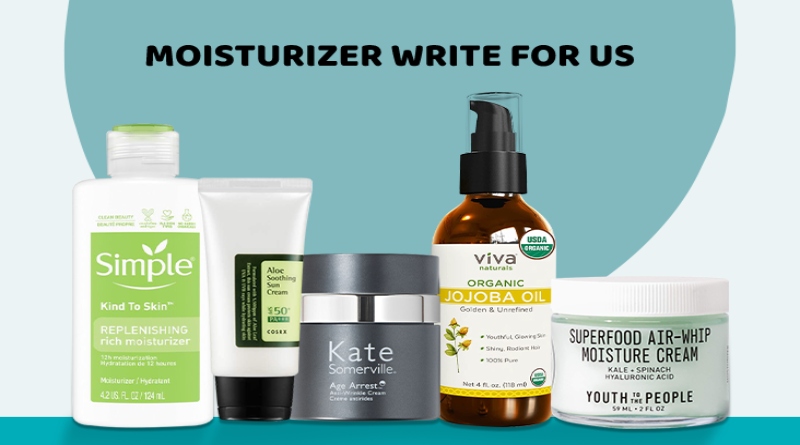
A moisturizer, also known as an emollient, is a cosmetic product that protects, moisturizes, and lubricates the skin. Sebum, generated by healthy skin, generally performs these duties. “emollient” comes from mollie, which means “to soften.”
Water regularly evaporates from the deeper layers of the skin of the human body due to a phenomenon known as trans epidermal water loss. Human skin naturally maintains a dry, quickly shed surface as a barrier against viruses, debris, or harm by managing its water content while also keeping itself from drying out and becoming brittle and inflexible. The lipid bilayer between the corneocytes determines the capacity to retain moisture.
Explore More Skin Care & Beauty Topics
Moisturizers are classified as either occlusives or humectants, and their active components fall into one of two groups. Occlusives establish a layer on the skin’s surface that prevents moisture from leaving. The higher the impact, the more occlusive the formulation. Ointments are thicker than aqueous creams, which are more comprehensive than lotions. 4–8 g/(m2h) of water is generally lost via the skin. A coating of petrolatum applied to normal skin can lower that loss by 50–75 percent for many hours—natural oils similarly generated by the human bodywork to moisturize the skin.
Humectants are substances that absorb water. When the humidity is more than 70%, they can drink this water from the air and moisturize the skin, but they typically pull water from the dermis into the epidermis, making the skin drier. In 2001, research published in the journal Skin Research and Technology revealed no relationship between humectants and moisturizing effects. They are nearly often employed in conjunction with occlusives in practical applications.
Water is commonly used in moisturizers. It serves as a temporary hydration agent and a conduit for the absorption of certain ingredients and the evaporation of the moisturizer.
Consistent moisturization of the skin from water exposure can cause an allergic response or irritating contact dermatitis and foreign object penetration.
How to Submit Your Articles?
To write for us, you can email us at contact@healthsaf.com
Why Write for Health Saf- Write For Us
- Reach your target audience through Health Saf’s blog and gain greater exposure.
- Add a backlink to your website within the article and gain SEO value.
- Build relationships with your targeted audience.
- Get social media exposure as your published article can be shared across our social channels.
- Increase your brand and content visibility to a wider global audience.
Guidelines of the Article – Write For Us
- Article should be 1000+ words and completely unique.
- Maximum 2 links per article: 1 homepage link + 1 internal-page link.
- Content must be high-quality, well-researched, and informative.
- Submit an image with copyright permission, size 1200 × 700 pixels.
- Content should be checked with Grammarly to avoid grammatical errors.
- The quality team will review the article for plagiarism, tone, and content guidelines.
- Approved articles are forwarded to the editorial team for scheduling.
- Articles are scheduled according to the editorial queue.
- After publication, the article link is sent to the quality team.
- The quality team checks content alignment, technical SEO, and link placement before final confirmation.
Our “Write For Us” pages are created for writers, bloggers, content creators, and individuals who enjoy writing and reading informative blogs. These pages provide an opportunity for contributors to share original, useful, and reader-friendly content related to the topics listed on our website