
Food Write For Us
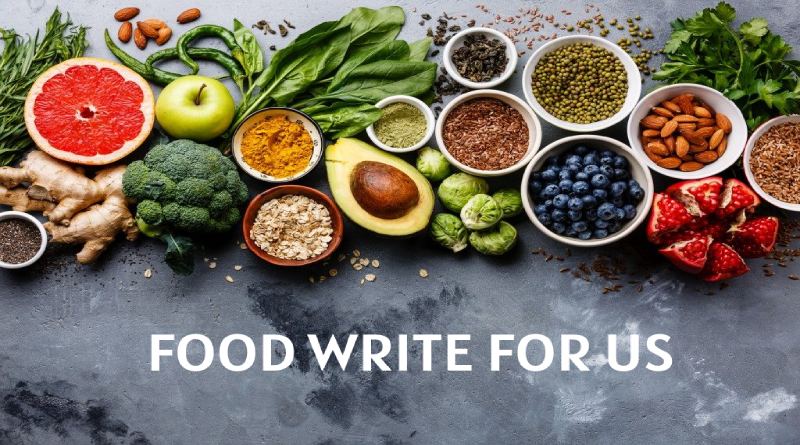
Food is any material taken to offer nutritional support to an life form. Food is often resulting from plants, animals, or fungi and provide vital elements such as carbs, lipids, proteins, vitamins, and minerals. The material is consumed by an organism and incorporated by its cells to give energy, sustain life, or encourage development. Diverse animal species have different eating behaviors that suit the demands of their metabolisms, and these feeding behaviors have frequently evolved to fit a specific ecological niche within specific geographical contexts.
Herbivorous people are very adaptive and have evolved to find food in various habitats. Humans have historically obtained food through two effective methods: hunting and gathering and cultivation. Humans settled into agrarian lifestyles with meals modified by agricultural opportunities in their location as agricultural technology advanced.
Explore More Nutrition & Diet Topics
Geographic and cultural diversity has resulted in the development of many cuisines and culinary arts, including a diverse range of products, herbs, spices, methods, and recipes. Because of influences such as international commerce and globalization, foodstuffs have become more widely available outside their geographic and cultural origins, resulting in a cosmopolitan exchange of diverse cuisine traditions and practices.
The food system has a significant influence on various other social and political concerns, such as sustainability, biological diversity, economics, population expansion, water availability, and food access. The International Covenant on financial, Social, and Cultural Rights recognizes the “right to an acceptable standard of life, including enough food,” and the “basic right to be free from hunger.”
The industrial food industry, which produces food via intensive agriculture and distributes it through complicated food processing and distribution networks, now supplies the bulk of the food energy required by the world’s ever-increasing population.
Because traditional agriculture is primarily reliant on fossil fuels, the food and agricultural sector is a significant contributor to climate change, accounting for up to 37% of global greenhouse gas emissions. Reducing the carbon intensity of the food system and reducing food waste are critical mitigation measures in the global response to climate change.
How to Submit Your Articles?
To write for us, you can email us at contact@healthsaf.com
Why Write for Health Saf- Nutrition Write For Us
- Reach your target audience through Health Saf’s blog and gain greater exposure.
- Add a backlink to your website within the article and gain SEO value.
- Build relationships with your targeted audience.
- Get social media exposure as your published article can be shared across our social channels.
- Increase your brand and content visibility to a wider global audience.
Guidelines of the Article – Nutrition Write For Us
- Article should be 1000+ words and completely unique.
- Maximum 2 links per article: 1 homepage link + 1 internal-page link.
- Content must be high-quality, well-researched, and informative.
- Submit an image with copyright permission, size 1200 × 700 pixels.
- Content should be checked with Grammarly to avoid grammatical errors.
- The quality team will review the article for plagiarism, tone, and content guidelines.
- Approved articles are forwarded to the editorial team for scheduling.
- Articles are scheduled according to the editorial queue.
- After publication, the article link is sent to the quality team.
- The quality team checks content alignment, technical SEO, and link placement before final confirmation.
Our “Write For Us” pages are created for writers, bloggers, content creators, and individuals who enjoy writing and reading informative blogs. These pages provide an opportunity for contributors to share original, useful, and reader-friendly content related to the topics listed on our website