
Having scabs on the scalp can be uncomfortable and embarrassing for you. These scabs can have various causes such as dandruff, psoriasis, seborrheic dermatitis, eczema, or fungal infections. Regardless of the cause, maintaining a healthy scalp is important for overall hair health and comfort.
One effective approach to managing and preventing scalp issues involves using a scalp scrubber and massaging shampoo brush.
In this article, you will read about the nature of scalp scabs and how you can easily promote a healthier scalp by using the massaging shampoo brush.
Scabs on the scalp causes
Scabs on your scalp are typically crusty patches that form as a result of the skin’s healing process. Various factors can cause these:
– Dandruff: Flaky, itchy scalp often due to dry skin or a sensitivity to hair products.
– Psoriasis: An autoimmune condition that causes skin cells to build up rapidly, leading to thick, scaly patches.
– Seborrheic Dermatitis: A chronic form of eczema causing red, flaky skin often accompanied by itching.
– Eczema: Inflammatory skin condition causing red, itchy patches.
– Fungal Infections: Conditions like ringworm that cause itchy, scaly patches.
Effective treatment for scabs on your scalp addresses the underlying cause and maintains a clean, healthy scalp. A scalp scrubber in the form of a massaging shampoo brush is among those, helping you to regain a healthy scalp.
How does a scalp scrubber work?
A scalp scrubber is a tool designed to exfoliate the scalp, removing dead skin cells, excess oil, and product buildup. This scrubber often has soft, flexible bristles made from silicone, ensuring a gentle yet effective scrub.
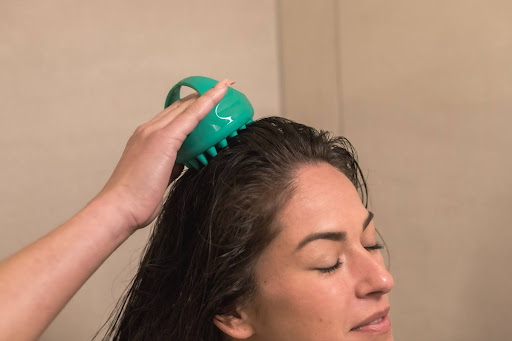
The massaging shampoo brush is such a scalp scrubber.
Massaging Shampoo Brush
This tool features soft, silicone bristles designed to massage your scalp while shampooing. It helps distribute shampoo evenly, stimulates blood circulation, and provides a relaxing experience. Follow this instruction for the best results:
- Apply your shampoo: Start by applying your preferred shampoo to wet hair.
- Scrub gently: Using the shampoo brush, gently massage your scalp in circular motions. Focus on areas with buildup or scabs, avoiding excessive pressure to prevent irritation.
- Rinse thoroughly: Rinse out the shampoo and repeat the process if necessary.
- Clean the massaging brush: After you use the brush, rinse it thoroughly to remove any residue and allow it to air dry.
Benefits of the massaging shampoo brush
Enhanced exfoliation
Regular use of a scalp scrubber can help exfoliate dead skin cells, reducing the occurrence of scabs on your scalp and preventing clogged hair follicles.
Improved blood circulation
The massaging action of the brush stimulates blood flow to your scalp, promoting healthier hair growth and reducing the risk of scab formation.
Product efficacy
By evenly distributing shampoo and other hair treatments, the massaging brush ensures that your product penetrates more effectively, enhancing its benefits.
Relaxation and stress relief
The gentle massaging action provides a soothing, spa-like experience, reducing stress and tension.
Prevention of build-up
Regular use prevents the accumulation of oil, dead skin, and product residue, maintaining a cleaner scalp environment.
Looking at it like this, addressing scabs on the scalp involves not only treating the underlying causes but also adopting a consistent scalp care routine. A scalp scrubber, like a massaging shampoo brush, offers you a practical and effective solution to maintain a healthy scalp. By incorporating this device into your hair care regimen, you can enjoy improved scalp health, enhanced hair growth, and a more comfortable, itch-free experience.
Also Read: What is the use of Monatomic Gold?